Scientific policing
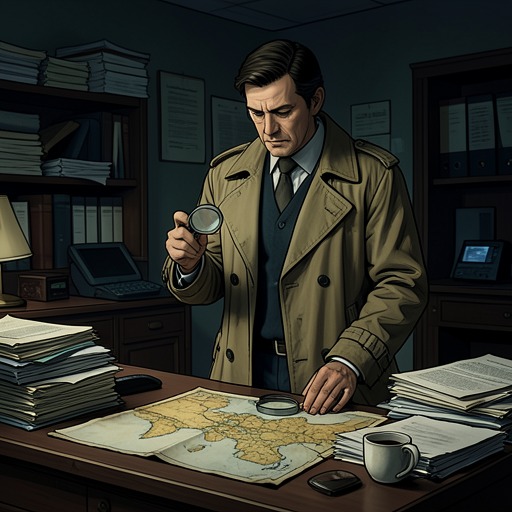
Killers of the Flower MoonScientific policing was the Bureau’s project of making investigation systematic: agents were to classify information consistently, preserve it in usable form, and gather evidence according to formal rules and technical methods. In the Osage murder cases, that project answered a practical failure—earlier investigators had produced an abundance of leads but too little admissible proof—while also raising a harder question: how could method distinguish fact from a convincing story when the sources themselves might be corrupt or fabricated?
From scattered reports to a system
Before John Edgar Hoover’s reforms, agents could report by telephone, telegram, or an in-person briefing. Important information, even entire case files, could be lost in the process. Hoover’s new manual addressed not only agents’ conduct but the handling of information: reports were to be standardized and filed on single sheets, making them easier for prosecutors to assess and reducing paperwork.
The filing system reflected Hoover’s experience as a Library of Congress clerk. He adapted a classification scheme, with numbered subdivisions, for the Bureau’s Central Files and General Indices. The aim was to make a growing body of information retrievable rather than leave it scattered across informal communications. Hoover’s separate Personal File, which included material that could be used to blackmail politicians, stood apart from those operational records—a revealing distinction between the Bureau’s public system of classification and information kept for private leverage.
Technical skill and rules of proof
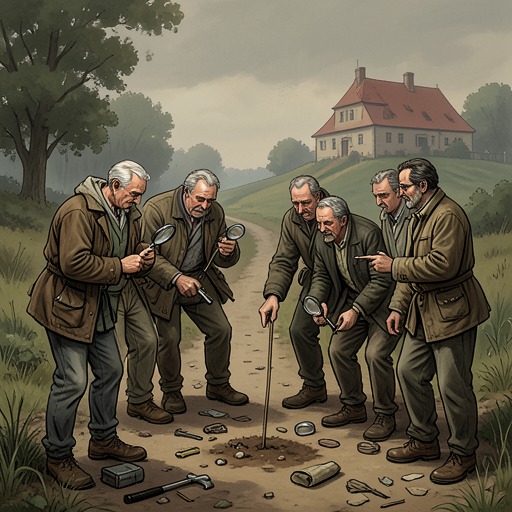
At a makeshift training school in New York, agents learned the new regulations and methods. They were increasingly trained in what Hoover called scientific policing, including fingerprint and ballistics techniques. Formal rules for gathering evidence were meant to prevent cases from being dropped or stalled, as the first investigation into the Osage murders had been. The ambition was not simply to collect more information, but to collect it in a form that could survive scrutiny and support prosecution.
The investigation showed why that distinction mattered. T. B. White found that apparent story lines repeatedly led back to private detectives and local lawmen whose claims rested on hearsay. In a county where corruption seemed to reach across institutions, the repetition of a claim did not make it reliable; sources might be circulating disinformation to hide the actual plot. Earlier investigators had not necessarily lacked leads. They had developed them, then abandoned them, failed to corroborate them, or left them neither proved nor conclusively disproved. White’s task was to separate what could be established from what merely fitted a plausible account.
That discipline also meant testing evidence that appeared to incriminate people. A witness’s account implicated Rose Osage and Joe Allen in Anna Brown’s killing, but the autopsy findings and the absence of a blood trail did not fit the described movement of Brown’s body. The witness eventually admitted that a strange white man had written the statement and forced her to sign it, although its contents were false. The episode exposed a danger beyond lost evidence: investigators could be handed evidence that had been manufactured to misdirect them.
Standardization and its tensions
Hoover’s system sought a national force whose members could work through shared procedures rather than rely on local habits. That change could insulate agents from local corruption, but it treated them increasingly as interchangeable employees and could disregard regional knowledge. White argued that an agent suited to undercover work as a Texas cattleman in the Osage case might be ineffective in Chicago, New York, or Boston. Hoover did not accept that regional familiarity should define an agent’s usefulness. The disagreement marks a tension within scientific policing: uniform procedures promise consistency, but policing still depends on understanding particular places and people.
The rules also shaped workplace discipline. Hoover demanded compliance, fired agents for drinking liquor, and expected reports in the prescribed format. White, though himself exacting, sometimes accepted responsibility when an agent’s report failed to meet the standard, shielding the subordinate from Hoover’s anger. Scientific policing therefore involved more than technical tools or evidentiary rules; it was also a managerial system that measured conduct, standardized paperwork, and placed agents under centralized authority. Some veteran agents rejected the manuals, while White adopted neat reports and praised the methods even as he sometimes chafed at Hoover’s dictates.
The case as proof—and as publicity
For Hoover, the Osage investigation became a demonstration of the modern Bureau. The St. Louis Post-Dispatch contrasted the failure of local and state officials with the federal agents’ arrival, presenting the case as evidence that a professional national force could make law effective. The Bureau’s use of fingerprint systems and scientific methods gave that account a compelling public form.
But the public story was cleaner than the investigation. Hoover did not disclose earlier Bureau failures, including Blackie Thompson’s escape while under Bureau watch or the false starts during which further murders occurred. He encouraged coverage of the case’s human-interest dimensions and supplied material for favorable reporting. In 1932, the Bureau worked with The Lucky Strike Hour to dramatize its cases; at Hoover’s request, Agent Burger wrote fictional scenes for the Osage episode. Its closing moral cast the federal agent as the criminal’s inevitable superior in a battle of wits. That broadcast presented scientific policing not as a difficult practice of verification but as a triumphant, already settled story.
The difference between the two versions is central to the concept’s meaning in the book. Standardized files and formal evidence rules could make investigations more accountable and usable in court, but technical procedure alone could not guarantee truth: investigators still had to examine where claims came from, whether they were independently supported, and whether apparent evidence had been coerced or invented. The case strengthened the Bureau’s claim to scientific authority even as its carefully managed origin story concealed mistakes. Scientific policing thus appears both as a practical method for building provable cases and as an institutional ideal whose public image could outrun the evidence behind it.